
Artemis Baltoyanni and Doriano Navarra are pleased to present the exhibition of the artist Jean-Michel Basquiat: Untitled at The Intermission Gallery from May 22 to August 2, 2025


Refusing to title an artwork allows an image or object to stand on its own, without verbal or contextual support. Such an approach hints at how one might consider with clear eyes the work of Jean-Michel Basquiat. An untitled work in oilstick from 1983 contains no image at all—only the artist’s signature, the year, and title: UNTITLED. A Duchampian gesture of pure artistic declaration, this work makes its critique plain: name is commodity and identity is icon. No title necessary.
Untitled, the first exhibition of Jean-Michel Basquiat’s work to be staged in Greece, presents a selection of works on paper that contain an index of the artist’s major themes and symbols. Primarily showcasing a young Basquiat on the cusp of acclaim and stardom, Untitled demonstrates an artist operating in the interstices between play and critique, ideas and worlds. With works made by the artist when he was as young as 18, Untitled captures the period when Basquiat’s relationship to language would evolve, becoming more ambitious and visceral once he graduated from the street-famous SAMO tag. The formal concerns of the young artist begin to take shape.
In 1980 and ’81, the years in which a majority of the works in Untitled are from, we see the now-immortal personal mythology of Basquiat emerge. Skulls and crowns, weapons and fighters proliferate in oilstick and graphite across whatever paper fell in his hands. The freedom paper affords the artist, letting ideas flow quickly and uninhibitedly, belies the weight of his subjects. With expressive gestures and a fractured, intuitive deployment of language, Basquiat constantly points the viewer toward the underlying precarity of both heroism and sovereignty through subtle symbolic association. Signs of exaltation and death, bellicosity and control are never far apart in these works, illustrating the neutralizing forces that underpin the relationship between the individual and society. Elevation necessarily sets the stage for collapse; commodification strips vitality of significance.
In his 1982 portrait of Joe Louis, Basquiat depicts the bust of his frequent subject, a heavyweight boxing champion widely considered the first African-American to become a national hero after his 1938 defeat of German fighter Max Schmeling. Underneath the evocative portrait is the neologism SKEPTISM, an intentional misspelling of the Greek-derived skepticism. In this context, the word serves to question the conditions of Louis’s glorification, fraught with the projections of how an African-American is to act amidst a white public. Created the year Basquiat staged his first solo exhibition in NYC and showed at Documenta 7, this portrait can be read as equally historical and autobiographical, a testament to the artist’s unique ability to absorb cultural referents into his own highly personal symbology.
Whether boxers or cartoon characters, kings or kids, Basquiat’s figures are charged with the weight of the world’s contradictions. There are always limits imposed on heroism, and visibility necessarily comes with expectation and exploitation. Yet Untitled is a testament to the defiance of prolific expression.
The exhibition space is designed by Kois Associated Architects, who created an environment that amplifies the intensity of Basquiat’s work and highlights the exhibition’s dialogue with the urban and cultural fabric of Piraeus.
ABOUT THE ARTIST
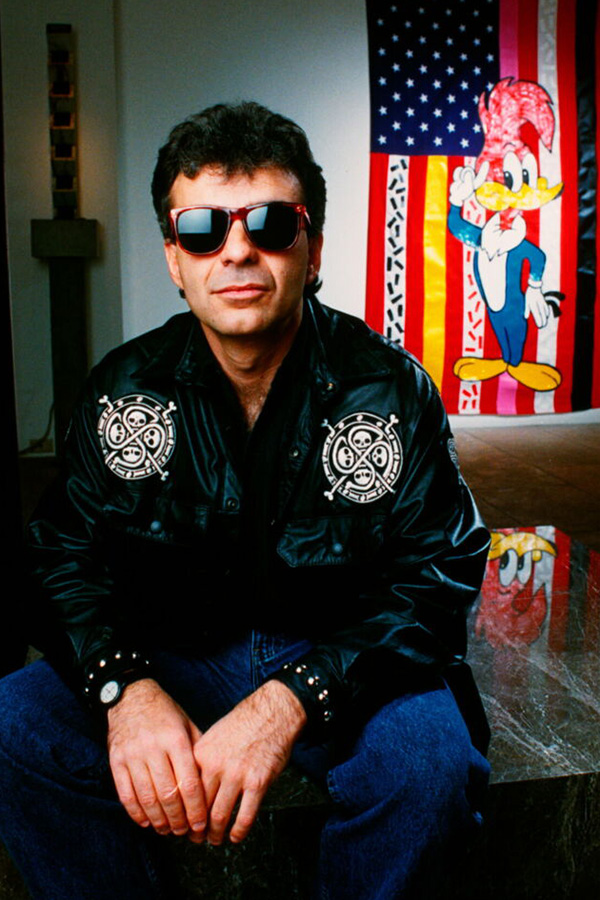
Born in Brooklyn in 1960, Jean-Michel Basquiat first gained notice in the late 1970s as SAMO©, before bursting onto the New York scene in 1981. His paintings, built from words, crowns, skeletal figures and references to African American history, question power, racism and death. He collaborated with Andy Warhol and died in 1988, aged 27. Galerie Enrico Navarra published his catalogue raisonné in 1996.
Sign up for our newsletter
Contact us
Publisher: Doriano Navarra
Site hosted by: Scaleway – Headquarters: 8 rue de la Ville l’Evêque, 75008 Paris
In accordance with Law No. 78-17 of January 6, 1978, known as «Data Protection and Civil Liberties,» you have the right to access, modify, rectify, and delete your personal data. You may exercise this right by submitting a simple request by mail to Galerie Enrico Navarra – 75, rue du Faubourg Saint-Honoré 75008 Paris – France or by email to presse@enriconavarra.com.
If you wish to ask us questions regarding our privacy policy or the use of your personal data, you can contact us at press@enriconavarra.com.
By browsing our site, you are informed and agree that your personal data may be collected on the site and used by it, which acts as data controller within the meaning of Regulation (EU) 2016/679 of the European Parliament and of the Council of 27 April 2016 on the protection of natural persons with regard to the processing of personal data and on the free movement of such data, and repealing Directive 95/46/EC (hereinafter referred to as the «General Data Protection Regulation» or «GDPR»).
We are committed to protecting and ensuring the security and confidentiality of your personal data in accordance with the GDPR, including by taking all necessary precautions to prevent this data from being distorted, damaged, or accessed by unauthorized third parties.
The elements present on this site (logos, texts, photos) are the exclusive property of Galerie Enrico Navarra. Any use, reproduction, or modification, even partial, of these elements without the agreement of Galerie Enrico Navarra is prohibited.
The information collected during your visit to the site is exclusively intended for internal use and will not be communicated to third parties for commercial purposes, except with your authorization.
This website uses Google Analytics, a web analytics service provided by Google, Inc. («Google»). Google Analytics uses cookies, which are text files placed on your computer, to help the website analyze how users use the site.
The data generated by cookies about your use of the site (including your IP address) will be transmitted and stored by Google on servers located in the United States. Google will use this information for the purpose of evaluating your use of the site, compiling reports on site activity for its editor, and providing other services relating to site activity and internet usage.
Google may share this data with third parties if legally required or if the third parties process this data on behalf of Google, including, but not limited to, the publisher of this site. Google will not associate your IP address with any other data held by Google.
You can disable the use of cookies by selecting the appropriate settings in your browser. However, doing so may prevent the use of certain features of this site. By using this website, you expressly consent to the processing of your personal data by Google under the conditions and for the purposes described above.